Author: Robert Gregory

  • The Lord’s Table Meaning

    The Lord’s Table Meaning

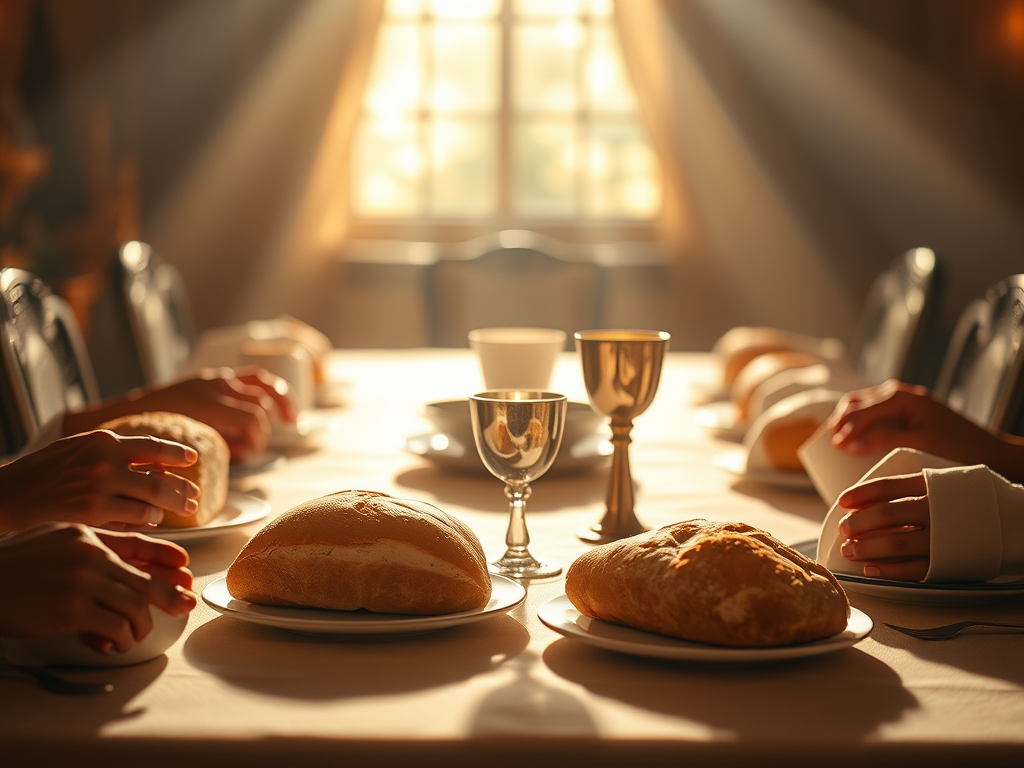
    The church has made the Lord’s Table far too mysterious.

    Catholics make it metaphysical, with the bread and cup transubstantiating. Some Protestants feel this is too superstitious and say it is a purely symbolic.

    But honestly, I think both approaches overcomplicate something simple.

    We engage all the time in physical acts embody spiritual connections, and we understand those connections intuitively.

    • When we pray with words, we know we are communing with God spiritually.
    • When we make love, we are bonding spiritually through a physical act.
    • When we hug people or shake hands, we know we are forming or strengthening a spiritual bond.
    • We understand that a physical diploma realizes a spiritual credential.
    • A signature on a paper realizes a spiritual relationship of debt or agreement.

    It is so intuitive, in fact, that we forget those things are spiritual, but that is exactly what they are: real spiritual relationships instantiated through physical tools and rituals.

    Yet somehow, we panic at the idea that the bread and the cup might actually embody the spiritual reality of our souls feeding on the body and blood of Jesus.

    It seems kind of silly to wrap ourselves around the axle when it comes to the most important spiritual relationship we have, especially when Jesus commanded us to come together at this table to proclaim His death until He comes again.

    We’d be better off if we’d simply worship and thank Him for giving us a means to realize our dependence on Him physically and spiritually as a whole person.

  • The Covenant Sermon Series

    In our Sunday morning worship, we’ve been in a 4-part series talking about God’s Covenants with man. This is a topical sermon series that will finish on Easter Sunday. The topics were:

    1. The Necessity of the Covenant
    2. The Terms of the Covenant
    3. The Price of the Covenant
    4. The Fulfillment of the Covenant

    We defined covenants as agreement that allows two or more parties to live in peace and harmony. A covenant between almighty God and man is an astonishing thing, since God does not need anything from man. But God is love – Father, Son and Holy Spirit live in eternal loving covenant together – and so man is drawn into covenant with God from the moment of his creation.

    The following chart shows on the left side the covenants God made with man that define our relationship with Him. Collectively, these are the “Old Covenant, or the “Old Testament”. And these build a story of redemption, addressing the problem of sin that was exposed in the first covenant with Adam. The right side is the “New Covenant”, or “New Testament”, in Jesus Christ. And the remarkable thing about the New Covenant is that everything in the New Testament is a fulfillment, a completion, a resolution of the Old Testament. And at the vertical center of the chart is God’s people, beginning with the promise to Abraham but finding its fulfillment in the Christian Church – as the whole world is blessed through Abraham’s seed.

    I hope as you look at the incredible alignment and single message between the Old and New Testaments, you will join me in marveling at the incredible and eternal grace of God.

    The Sermon audio where we discussed the chart can be found in our posted sermons, under “The Price of the Covenant”.

    If you click on the chart below, it will give you a full screen version.

  • He said I could come …

    Most of us fall prey to doomscrolling occasionally. For those of you that don’t, “Doom Scrolling” is wasting large chunks of time scrolling through posts or video clips on YouTube or Facebook or Instagram or TikTok. I don’t recommend it, but I do confess to falling prey to it sometimes.

    The only upside to doomscrolling is that occasionally you come across something slightly edifying or educational amidst the sea of trash. I don’t think it is a good trade getting 30 seconds of edification in exchange for consuming 30 minutes of worthless or even destructive input, but still sometimes the edifying items stick with you.

    Yesterday, I ran across an excerpt from a sermon by Alistair Beggs that stuck with me. He was talking about what constitutes saving faith. How much scripture or doctrine do you have to know and understand so that God will recognize you as a follower of Christ?

    To answer that question, he talked about the thief on the cross alongside Jesus that was told he would be with Jesus in paradise on that very day. And Alistair Beggs imagines an angel questioning this thief upon his arrival in heaven saying, “why are you allowed in here?” And the thief’s answer is simply, “The man on the middle cross said I could come.”

    Jesus said he could come. That’s it. That’s the only reason any of us can come.

    “Today, you will be with me in Paradise!”

    The thief probably knew almost nothing about Jesus, but Jesus promised he could join Him and he believed Him. It is the same for all of us. We will join Jesus in paradise because He told us we could come, and for no other reason. That is Christian faith boiled down to its essence. We are saved because Jesus said we could come with Him. No amount of Biblical knowledge or wisdom adds anything to our salvation. We don’t attend church or pray or read the Bible to make our salvation more certain. Nothing we do makes us more or less saved.

    Jesus saves us, and that is it.

    Having been saved, there is much value in knowledge and wisdom and good works and worship. But first, Jesus must say you can come.

  • Cancelling Last Sunday Services

    How should we feel about that?

    This past Sunday we cancelled our services due to the extreme cold. Our building has difficulty maintaining temperature, especially in the fellowship hall downstairs, and with so many in our congregation being older, we felt it was wiser for them to stay home, warm and safe.

    The decision makes sense practically. But it’s also worth reflecting briefly on why such a decision should never feel casual.

    Throughout Scripture, God’s people are defined as a people who are called together. From the Old Testament assembly of Israel (Deut. 4:10) to the New Testament exhortation not to neglect meeting together (Heb. 10:24–25), the covenant people of God are a gathered people. The Lord promises His special presence when His people assemble in His name (Matt. 18:20), and the regular gathering of the church is one of the ordinary means God uses to sustain our faith.

    That is why cancelling a service is never simply cancelling a meeting. Something important is missing, and we should feel that loss.

    At the same time, Scripture also commends wisdom and prudence. “A prudent man foresees evil and hides himself” (Prov. 22:3), and loving our neighbor includes taking real physical limitations seriously. In this case, the extreme cold and challenges of heating the building could have resulted in people getting badly chilled, leading to accidents or illness. Choosing not to gather was an act of care, not indifference.

    It is good for us to hold these truths together. The Lord’s Day gathering is central to the life of the church, and we should long for it when it is absent. Yet we are not bound to rigidity that ignores circumstance. The same God who calls us to assemble also teaches us to act with discernment and charity.

    Even when we cannot gather physically, we remain united in Christ. We continue in prayer, in the Word, and in hope, looking forward to the time when we can once again assemble as God’s covenant people.

    And when we do gather again, we do so with renewed gratitude—for warmth, for safety, and above all for the grace of God who calls us, week by week, to be His gathered church.

  • The Spirit, The Water and The Blood (1 John 5:5-11)

    A while back, we looked at 1 John 5:5-11 when reviewing the 2nd article of our Brandon Baptist Church Statement of Faith in a Sunday School class. Recently, I was asked about one of the verses in this passage, and that led me to turn my notes from the class slides into a written discussion. So, I decided to post that here for anyone that might be interested. Comments and thoughts welcome, since this certainly isn’t exhaustive.

    1 John 5: 5-11 is a passage rich with theological depth, focusing on the confidence we have because of God’s witness to the truth of the gospel. It offers a profound reflection on the harmony between heavenly and earthly testimonies, both of which affirm Jesus Christ as God’s Son and man’s Savior. In this post, we will explore these verses and their implications for our faith and witness as believers.

    The passage begins by emphasizing the victory believers have over the world through faith in Jesus as the Son of God (v. 5). Verse 6 then highlights that Jesus came “by water and blood”—a reference to pivotal aspects of His earthly ministry as the perfect obedient man and the Lamb of God. Verse 7 shifts our attention heavenward, describing the three who bear witness there: the Father, the Word, and the Holy Spirit. Finally, verse 8 brings the discussion back to earth, highlighting the three witnesses here: the Spirit, the water, and the blood. Together, these witnesses confirm the truth of the gospel and God’s redemptive work in Christ.

    The Trinity’s Witness

    The first question to ask is: To what are the Father, the Word (Jesus), and the Holy Spirit bearing witness?

    • Water: This symbolizes Jesus’ baptism and His righteous life, lived in complete obedience to the law. His baptism marked the beginning of His public ministry and was accompanied by the Father’s voice affirming, “This is my beloved Son, in whom I am well pleased.”
    • Blood: This refers to Jesus’ sacrificial death, which paid the penalty for sin. Isaiah 53:10 encapsulates this beautifully: “It pleased the Lord to bruise Him… When You make His soul an offering for sin, He shall see His seed, He shall prolong His days, and the pleasure of the Lord shall prosper in His hand.”

    The Heavenly Witnesses

    • The Father: As Judge, the Father affirms Jesus’ identity and mission. His declarations at Jesus’ birth and baptism and His pleasure in the Son’s sacrifice resonate with His role as the sovereign Judge.
    • The Word (Jesus): His life, teachings, passion, and victory testify to God’s truth and redemptive plan.
    • The Holy Spirit: The Spirit’s witness includes inspiring Scripture (God-breathed truth) and applying Christ’s redemptive work to believers’ hearts.

    The Spirit connects the elements of water (the law, as revealed in Scripture for our obedience) and blood (prophecies fulfilled in Jesus’ sacrificial death).

    The Earthly Witnesses

    On earth, the Body of Christ—the Church—carries forward this testimony.

    • Spirit: Baptism into new life by the Spirit testifies to Christ’s redemptive work in the individual.
    • Water: Baptism of believers into the Church, as well as the Church’s lived love, demonstrates Christ’s redemptive work in the community of faith.
    • Blood: The Lord’s Table (communion) and the sacrificial blood of martyrs bear witness to Christ’s atonement and the Church’s enduring faith. As 1 John 4:17-18 reminds us, “As He is, so are we in this world. There is no fear in love, but perfect love casts out fear.”

    Living as Witnesses

    This passage invites us to marvel at the harmony between the heavenly and earthly testimonies. It reminds us that God’s witness—through the Spirit, the water, and the blood—confirms the truth of the gospel and the redemptive work of Christ. As believers, we are called to carry this testimony into the world, living as active witnesses to God’s saving power and love.

  • Thanksgiving Pot-Luck

    Thanks to everyone who brought delicious food and thankful hearts to our Pot-Luck Thanksgiving meal this Sunday. It was a wonderful feast, made truly wonderful by the love and community of the church. We are blessed to be part of God’s church, to be called into fellowship with Jesus Christ.

  • Rediscovering the Reformation Conference 2024

    Thanks to everyone at Brandon Baptist for the work put in to host this conference for the 7th year! It was a wonderful conference, and the best attended since we started. It was particularly great to have 2 additional churches from Vermont join us, and 3 new speakers!

    The sermons about the church were excellent, and a great blessing and encouragement. And getting to sing with the church building full was wonderful. Let’s continue to pray for this movement of Biblically based, sound churches in Vermont, that God will use them to bring the message of God’s salvation through Jesus Christ to our friends and neighbors and world.

  • Brandon Baptist Block Party

    On October 19, Brandon Baptist is hosting a “block party” for its neighbors. This will be a time for our neighbors and our friends to meet each other. In this modern world, we so often fail to get to know our neighbors, and this is a chance to break the ice and establish some community.

    We will have tents and an outside heater, and there will be some catered snacks and chairs. We encourage everyone in the church to join us in meeting our neighbors, and to bring along anyone in your circles that you’d like to introduce to your friends at church!

  • Welcome to our incoming new Pastor, Rob Gregory

    In April of 2024, Rob and Christina Gregory moved to Brandon to join with the Brandon Baptist Church in ministry. After a faithful 30+ year pastoral career, our current Pastor Bob Bove and his wife Mary Lynne are retiring from full time ministry. Over the course of 2024, Rob and Bob are working together as co-elders in preparation for Rob assuming the full time responsibilities after the first of 2025.

    Rob and Christina moved here from Wilmington Massachusetts. Rob has been a layman and elder in churches for many years while working as an engineering and manager. After receiving a clear call to Brandon, Rob announce his retirement from his job, and together the Gregorys sold their house in Massachusetts and moved into a house in Brandon.

    Rob is no stranger to Brandon Baptist. His parents, Marge and Spence Gregory, were committed members, with Spence serving as an elder for several years. They lived in Sudbury, and Rob and his family spent many holidays and vacations in Sudbury and attending Brandon Baptist with his family.

    Bob and Mary Lynne will continue to attend Brandon Baptist, with Bob serving as an lay-elder after formally retiring.

    We are excited for the next chapter of ministry that God has in store for Brandon Baptist going forward as we proclaim the gospel of Jesus Christ.